
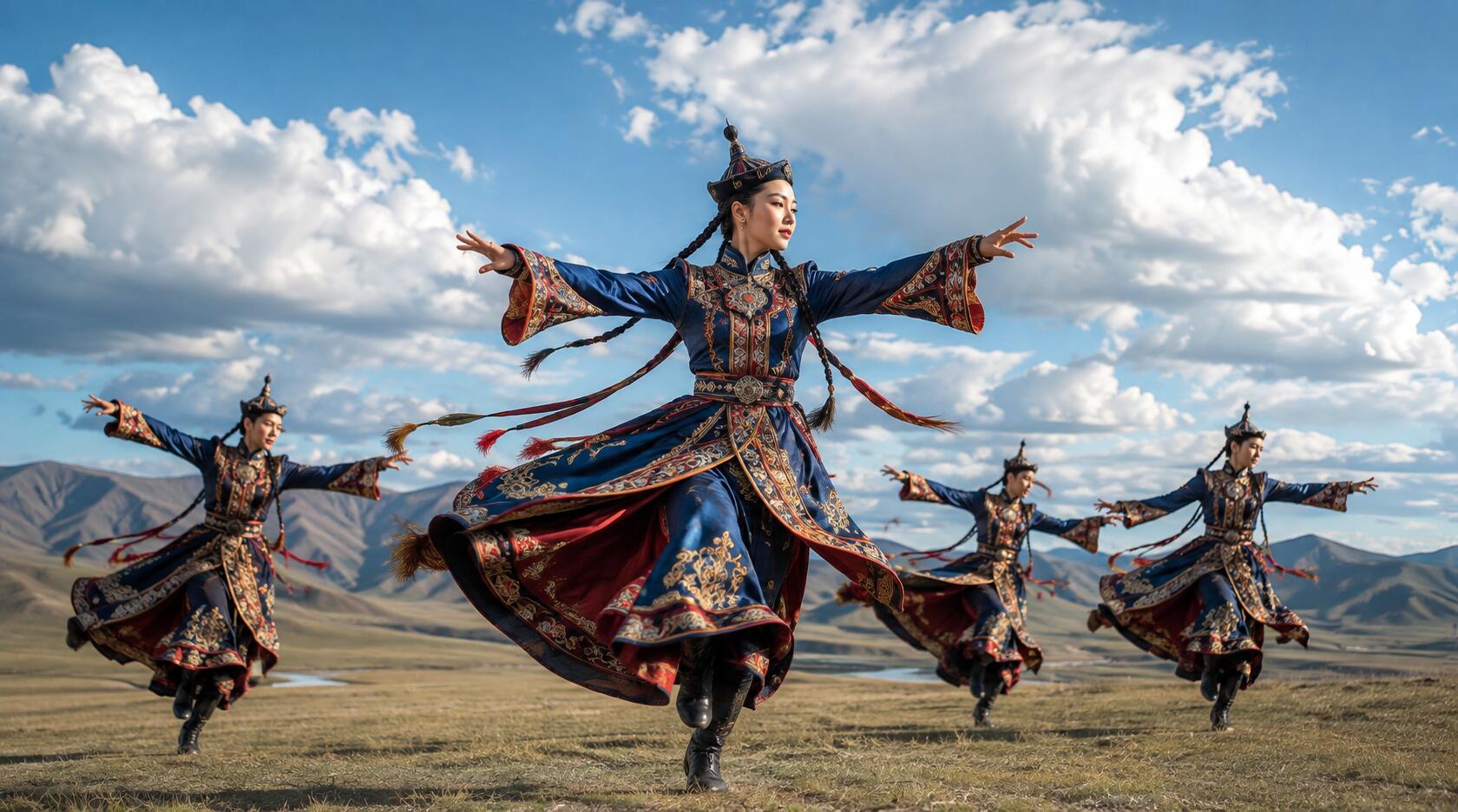
In the world of Mongolian dance, props are far more than mere decorations. They are extensions of the dancer’s body, vessels of emotion, and materializations of cultural symbols. A pair of chopsticks can drum out the exuberance of life; a porcelain bowl can balance the serenity of the sky; a sacred drum can bridge the gap to the spirit world. Understanding these props is key to grasping the cultural depth of Mongolian dance.
Chopsticks

Associated Dance: Chopstick Dance. Bamboo chopsticks, everyday eating utensils, transform into instruments of rhythm in the dancer’s hands. Gripping bundles in each hand, the dancer rhythmically strikes various body parts
—
hands, legs, shoulders, feet
—
producing crisp, rapid-fire sounds. Here, chopsticks are not just percussion instruments but an external manifestation of the dancer’s fiery passion and robust character.
Small Wine Cups

Associated Dance: Bowl and Cup Dance. The dancer holds a pair of small porcelain wine cups in each hand, using subtle finger control to click them together in a pleasing rhythm. Executing this intricate hand technique while simultaneously balancing a bowl on the head embodies the core virtuosity of this dance form.
Bowl
Associated Dances: Bowl Balancing Dance, Bowl and Cup Dance. The porcelain bowl is the most iconic balancing prop in Mongolian dance. Balanced atop the head, it symbolizes nobility and grace. In the Bowl Balancing Dance, the dancer spins and glides with the bowl perched above. In the Bowl and Cup Dance, the bowl on the head and the cups in hand create a dialogue, together testing the dancer’s ultimate core control and serene state of mind.
Lamp
Associated Dance: Lamp Dance. The lit oil lamp is a symbol of light. As the dancer moves with the lamp in hand within a darkened space, the flickering flame adds an aura of mystery and warmth. Due to the prop’s delicate nature, movements in the Lamp Dance are restrained, focusing on the subtle rhythms of the arms, wrists, and waist, creating a quiet, profound sense of ritual.
Silk Scarf (Red Silk)
Associated Dance: Andai Dance. The red silk scarf is the soul of the Andai Dance. In ancient rituals, waving the scarf was meant to dispel illness and gloom. In modern times, it has become a visual expression of collective joy. When masses wave red scarves and stomp the earth in unison, the spectacle is magnificent, brimming with primal vitality and emotional power.
Hada (Ceremonial Scarf)
Associated Dances: Welcoming dances, festival dances. The Hada is a ceremonial silk scarf
—
often white, blue, or yellow
—
used by Mongols and Tibetans to express respect and congratulations. In dance, performers hold or gently wave the Hada with slow, dignified movements, conveying the most sincere welcome and heartfelt blessings to honored guests.
War Banner (Suld)
Associated Dance: War Banner Dance. The war banner, especially the “Suld,” was the battle standard of Genghis Khan’s Mongol army, symbolizing martial prowess, strength, and the very soul of the tribe. In the War Banner Dance, performers wield this sacred emblem with vigorous, powerful movements, recreating the spectacular scene of Mongol warriors charging into battle
—
a potent concentration of national spirit.
Mask
Associated Dance: Chama Dance. The masks used in Chama are treasures of Tibetan Buddhist religious art. With exaggerated features and vivid colors, they are categorized as fierce masks (representing wrathful protector deities), benevolent masks (representing Bodhisattvas or revered monks), and various animal masks. Dancers wearing these masks are believed to be emanations of deities or protectors, and their every movement carries sacred solemnity.
Drum (Hand Drum, Large Drum)
Associated Dances: Böö Dance, Chama Dance. The drum plays a vital role in ritual dances. In the shamanic Böö Dance, the hand drum serves as the shaman’s steed and ritual tool for communicating with spirits, its intense beat a catalyst for entering trance states. In Chama Dance, large drums coordinate with ritual trumpets to govern the solemn tempo of the entire ceremony.
Ritual Trumpet (Dungchen)
Associated Dance: Chama Dance. The Dungchen is a large copper wind instrument unique to Tibetan Buddhism. Its sound is deep, resonant, and commanding, capable of piercing the heavens. During Chama performances, the sound of the ritual trumpet acts as a summons from the divine realm, establishing an atmosphere of profound solemnity and reverence.
Navigating life’s intricate fabric, choices unfold paths to the extraordinary, demanding creativity, curiosity, and courage for a truly fulfilling journey.


Leave a Reply